

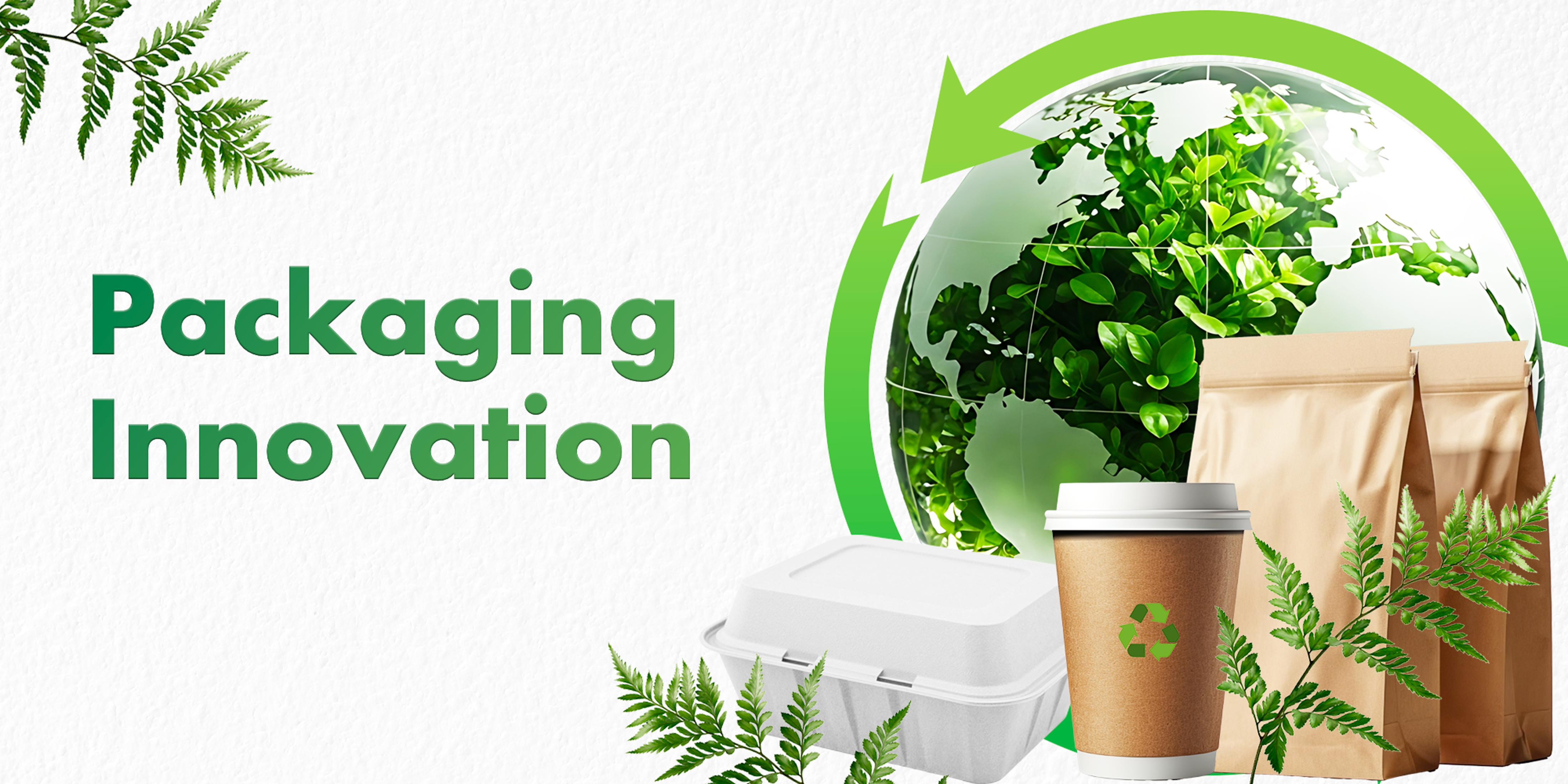
NEW ZONESustainable Packaging for the Future of Food
Supporting the Future of Food
Through Sustainable Packaging
Geopolitical tensions have increased packaging material costs,
driven by tighter naphtha supply and rising resin prices.
The Package Innovation Zone showcases practical solutions to
reduce procurement risks and support sustainability through materials,
technologies, and case studies.
Market Background & Industry ChallengesTight Supply of Plastic Raw Materials
-
 30%+Resin Price Surge
Naphtha supply disruptions have sharply increased the cost of resins essential for food packaging, making conventional procurement strategies increasingly untenable.
30%+Resin Price Surge
Naphtha supply disruptions have sharply increased the cost of resins essential for food packaging, making conventional procurement strategies increasingly untenable.
-
 The Procurement Challenge
Middle East tensions have stalled naphtha supply, driving up prices for the commodity resins food packaging depends on. Conventional sourcing can no longer absorb the impact.
The Procurement Challenge
Middle East tensions have stalled naphtha supply, driving up prices for the commodity resins food packaging depends on. Conventional sourcing can no longer absorb the impact.
-
 The Imperative for Action
The industry needs next-generation packaging strategies that deliver cost reduction, supply stability, and compliance with global sustainability regulations — simultaneously.
The Imperative for Action
The industry needs next-generation packaging strategies that deliver cost reduction, supply stability, and compliance with global sustainability regulations — simultaneously.
Zone ConceptA Platform for Real-World Implementation
Materials, technologies, and real adoption cases — all in one place, ready to act on.
-
 Procurement Risk Reduction & Sustainability
Strategies that strengthen supply resilience while meeting corporate sustainability commitments.
Procurement Risk Reduction & Sustainability
Strategies that strengthen supply resilience while meeting corporate sustainability commitments.
-
 LCA Optimization
Packaging approaches that minimize lifecycle environmental impact for credible ESG reporting.
LCA Optimization
Packaging approaches that minimize lifecycle environmental impact for credible ESG reporting.
-
 Cross-Industry Co-Development
Connect across sectors to fast-track joint development of next-generation packaging solutions.
Cross-Industry Co-Development
Connect across sectors to fast-track joint development of next-generation packaging solutions.
Exhibitor CategoriesThe 4 Pillars
The zone is structured around four pillars covering
the full landscape of sustainable packaging.
-
 Biomass
Plant-derived materials: Bio-PE/PP, PLA, and other eco-friendly resins.
Biomass
Plant-derived materials: Bio-PE/PP, PLA, and other eco-friendly resins.
-
 Recycled
Circular economy solutions using mechanically and chemically recycled materials.
Recycled
Circular economy solutions using mechanically and chemically recycled materials.
-
 Emerging-Market Materials
Sourcing from Southeast Asia and South America for cost reduction and supply diversification.
Emerging-Market Materials
Sourcing from Southeast Asia and South America for cost reduction and supply diversification.
-
 Advanced Technologies
Lightweighting, mono-material design, and smart packaging for enhanced performance.
Advanced Technologies
Lightweighting, mono-material design, and smart packaging for enhanced performance.
1. Biomass Packaging
Plant-derived innovation on the path away from petroleum.
- Bio-Based Resins
- Sugarcane- and corn-derived resins — functionally equivalent to conventional plastics with a lower carbon footprint.
- Cellulose-Based Alternatives
- Cellulosic materials as direct substitutes for conventional plastic films and rigid packaging.
- Carbon-Neutral Contribution
- Biomass packaging absorbs CO₂ during growth, providing a direct pathway to carbon neutrality goals.
2. Recycled Packaging: Scaling Real-World Adoption
Turning "waste" into "resource."
- Mechanical & Chemical Recycling
- Purification technologies that bring recycled PET/PP to food-contact grade, expanding viable applications.
- End-to-End Traceability
- Quality management systems tracking material from collection to remanufacture for brand accountability.
- Global Regulatory Compliance
- Solutions aligned with European and international environmental regulations for multi-market operations.
3. Emerging-Market Materials: Diversifying the Supply Chain
A global procurement portfolio to reduce single-source dependency.
- Global Procurement Portfolio
- Bio-based resources, fibers, and paper materials from Southeast Asia and South America to eliminate over-reliance on any single supply source.
- Significant Cost Reduction
- Raw material price advantages that strategically contain packaging costs and preserve competitiveness amid inflation.
- Biodegradable Alternatives
- Sustainable materials — bamboo, hemp, seaweed — harnessing regional strengths for consistent, scalable supply.
4. Advanced Packaging Technologies
Doing more with less — smarter, lighter, recyclable.
- Lightweighting & Down-Gauging
- Reducing material use while maintaining strength — lowering logistics costs and plastic output simultaneously.
- Mono-Material Design
- High barrier performance from a single material type, dramatically improving recyclability across the supply chain.
- Smart Packaging
- Freshness indicators and digital traceability features that support food waste reduction and consumer transparency.
Benefits of Exhibiting
A unique environment for side-by-side comparison,
business development, and practical problem-solving.
-
 Cross-Category Comparison: Materials × Technologies × Case Studies
Compare biomass, recycled, emerging-market, and advanced-technology solutions side by side — with real implementation examples on the show floor.
Cross-Category Comparison: Materials × Technologies × Case Studies
Compare biomass, recycled, emerging-market, and advanced-technology solutions side by side — with real implementation examples on the show floor.
-
 Accelerate Deals & Co-Development
Meet decision-makers from major food brands and retailers. Move from conversation to contract in a single event.
Accelerate Deals & Co-Development
Meet decision-makers from major food brands and retailers. Move from conversation to contract in a single event.
-
 Integrated Consultation: Procurement, Quality & LCA
Practical guidance on procurement strategy, food-grade quality standards, and LCA optimization — all under one roof.
Integrated Consultation: Procurement, Quality & LCA
Practical guidance on procurement strategy, food-grade quality standards, and LCA optimization — all under one roof.
-
 15-Minute Mini Seminars
On-floor sessions covering regulatory updates, material innovations, and real adoption cases — actionable insight for busy professionals.
15-Minute Mini Seminars
On-floor sessions covering regulatory updates, material innovations, and real adoption cases — actionable insight for busy professionals.